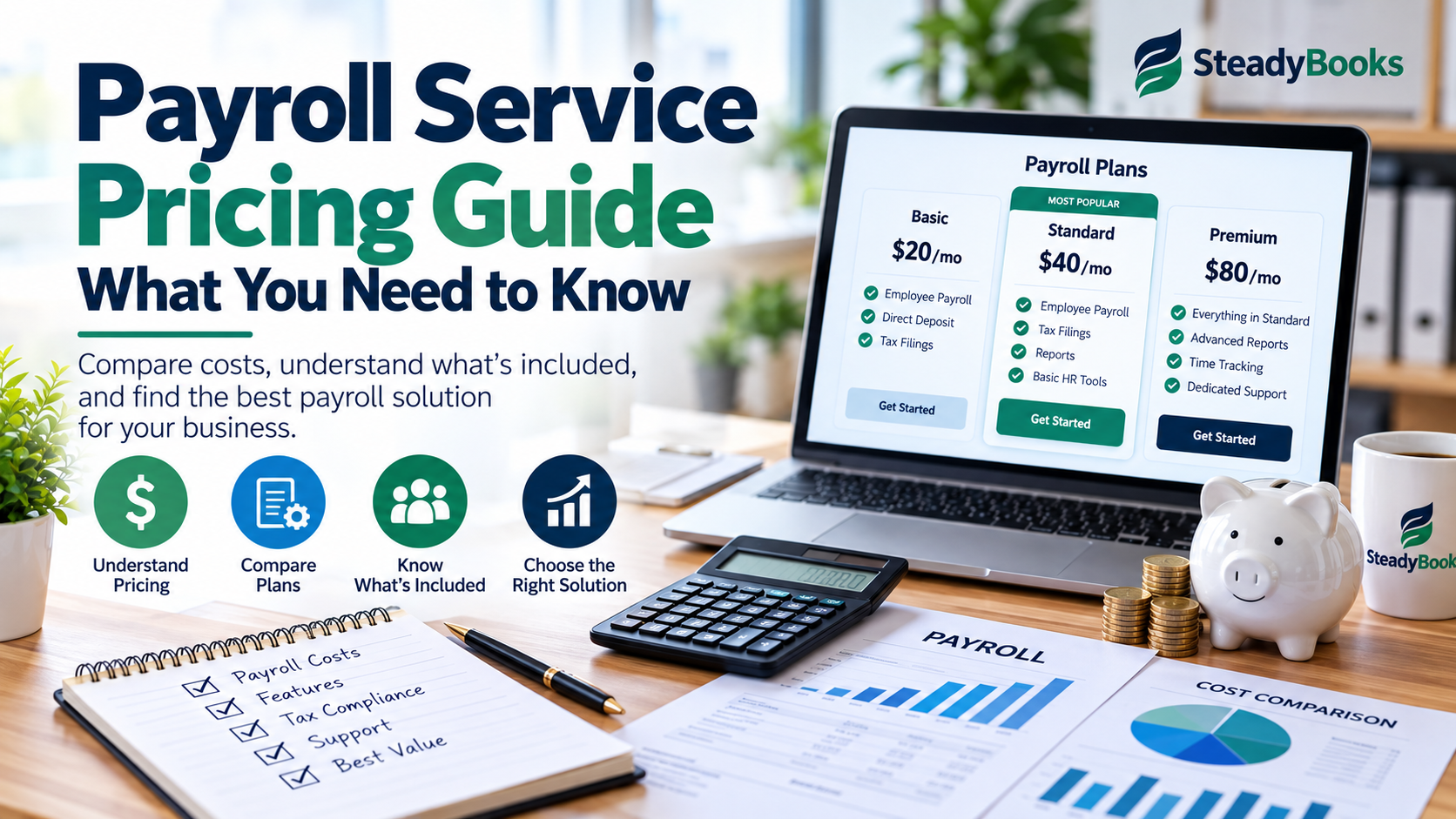
Nearly 40% of small businesses face tax penalties each year because of simple calculation errors. Managing employee pay requires great care and strict compliance with regulations.
Many owners see payroll service pricing as another monthly bill. But it is a strategic investment in company stability. Outsourcing saves time and protects firms from costly legal mistakes.
Finding the right payroll service cost can feel overwhelming. Advertised rates often start at about $39 per month, but needs can change the price. Providers may charge by staff size, payment frequency, or needed support.
Understanding the full picture is essential for an informed choice. This guide helps you find hidden fees, compare providers fairly, and assess professional help’s true value for your growing team.
Table of Contents
ToggleKey Takeaways
- Small businesses often face tax penalties due to manual errors.
- Outsourcing compensation management improves accuracy and compliance.
- Base rates are often just a starting point for total expenses.
- Fees vary significantly based on employee count and feature sets.
- Comparing providers requires looking beyond the initial monthly quote.
- Strategic outsourcing allows owners to focus on core business growth.
What Payroll Service Pricing Usually Includes
When you sign up for a payroll service, you pay for more than paycheck delivery. Most providers bundle key administrative tasks into their payroll pricing models to keep your business compliant and staff paid on time.
Core payroll processing and employee payments
At the heart of every service is the calculation of gross-to-net pay. This includes withholding the correct amounts for taxes, benefits, and garnishments before paying your team.
Providers typically offer several payment methods for your business needs. These include:
- Direct deposit into employee bank accounts.
- Physical check printing and mailing services.
- Pay cards for employees without traditional bank accounts.
Tax calculations, filings, and year-end forms
A major benefit of outsourcing is automating complex tax duties. Your provider calculates, withholds, and submits federal, state, and local payroll taxes on time.
Full-service plans also prepare important year-end documents. This keeps your W-2 and 1099 forms accurate and sends them to employees and government agencies by required deadlines.
Employee self-service and payroll reporting
Modern platforms offer digital portals for your workforce. Employees can view pay stubs, download tax documents, and update personal information without contacting HR.
These systems also create detailed reports for business owners. You can track labor costs, monitor tax liabilities, and review department spending through customizable dashboards.
How pricing changes with employee count and pay frequency
It is important to understand how payroll processing fees change with your operating habits. Most providers charge a base monthly fee plus a cost for each active employee.
Weekly payroll may cost more than monthly payroll. Each pay cycle requires administrative work, so frequent runs often create higher transaction fees. Always verify if your provider charges per pay period or per employee to avoid unexpected spikes in your monthly bill.
How Payroll Providers Structure Their Fees
Choosing the right payroll service requires understanding how different payroll pricing models affect your bottom line. Providers use different billing methods that change your monthly operating costs.
Base monthly fees and per-employee charges
Many modern platforms use a per employee per month payroll (PEPM) model. This model has a fixed base fee and a set charge for each active worker.
This model offers predictability for businesses with stable headcounts. You can forecast monthly costs because the price stays the same, no matter how often you run payroll.
Per-payroll pricing for weekly, biweekly, and semimonthly schedules
Some providers instead use per payroll run pricing. You pay a fee each time you process payroll, regardless of your employee count.
This can become expensive when you run payroll weekly instead of monthly. Frequent pay cycles raise total transaction fees, so this model suits companies with fewer, larger pay runs.
Flat-rate plans versus à la carte payroll services
Some vendors offer flat rate payroll pricing, which combines core services into one predictable monthly bill. This approach can make budgeting easier.
À la carte services let you choose specific features. The starting cost may seem lower, but adding tax filing or direct deposit can quickly raise the total.
Why advertised starting prices may not reflect the final bill
Advertised rates often show the “base” cost for one user or limited features. Adding state tax filings, year-end forms, or specialized support can make the final bill exceed the first quote.
“The bitterness of poor quality remains long after the sweetness of low price is forgotten.”
Comparing a small-business plan with a growing-company plan
Understanding plan tiers is vital for long-term growth. A basic plan may cover simple salary payments, while a growing-company plan handles more needs.
| Feature | Small Business Plan | Growing Company Plan |
|---|---|---|
| Pay Frequencies | Limited (Monthly/Biweekly) | Unlimited/Custom |
| Tax Filing | Federal Only | Federal, State, and Local |
| Support | Email/Chat | Dedicated Account Manager |
Careful evaluation of these tiers ensures you do not pay for features you do not need today. It also prevents you from outgrowing your software too quickly as your team expands.
Payroll Service Pricing by Business Size
Understanding payroll outsourcing starts with knowing how headcount and employee types affect your budget. Staff count matters, but business complexity often shapes the final payroll service cost. Small business payroll costs may vary with these factors.
What a small business with fewer than 10 employees may pay for
Very small teams often seek affordable automation and predictable minimum fees. These fees cover essential tax filings and direct deposits without extra features.
Monthly costs may range from $125 to $450. This range covers standard processing for a handful of employees and basic federal and state tax compliance.
Pricing considerations for companies with 10 to 50 employees
As teams grow, they need scalable payroll software pricing models. Companies in this range often need automated time tracking or enhanced reporting tools. These tools help manage a growing workforce.
As these businesses grow more complex, per-employee pricing can offer better value. This model charges only for active staff each month, keeping expenses aligned with growth.
When midsize employers need custom payroll quotes
Midsize organizations often have needs that standard plans cannot meet. If you operate across multiple states or manage complex garnishments, request custom payroll quotes. This confirms that your provider can handle the added regulatory burden.
Monthly costs may range from $325 to $2,450 or more. The higher investment covers dedicated support teams and advanced compliance management. These services help protect your business from costly errors.
How contractors, hourly workers, and multiple locations affect costs
Workforce makeup matters as much as headcount. Managing 1099 contractors with W-2 employees adds administrative work and may raise your final bill.
| Business Factor | Impact on Pricing |
|---|---|
| Multiple Locations | Increases tax filing complexity |
| Hourly Workers | Requires time-tracking integration |
| Contractors | Adds 1099 preparation fees |
Complexity is the true driver of cost in the payroll industry. Whether you manage multiple state tax jurisdictions or irregular pay schedules, verify your plan covers these needs. This can help you avoid unexpected surcharges.
Additional Payroll Features That Increase the Cost
Choosing payroll software requires a close look at which features add real value. Basic plans cover core tasks, while advanced modules can manage your wider workforce. Compare each option to avoid unnecessary payroll add-on fees and give your team useful tools.
Time tracking, scheduling, and overtime management
Payroll software with time tracking removes manual data entry. Automation calculates hours accurately, including overtime rules under local labor laws. By syncing schedules with payroll, you lower errors and pay employees correctly each pay period.
Benefits administration and retirement plan support
Managing health insurance deductions and 401(k) contributions takes time for small business owners. Many platforms automate benefits administration and sync deductions with payroll runs. Some providers add payroll add-on fees, so check whether your plan includes these services or charges monthly.
Workers’ compensation and state-mandated programs
Employers must follow state programs, including disability insurance and workers’ compensation. Some payroll services offer “pay-as-you-go” workers’ compensation insurance, based on actual payroll data. This option supports cash flow and compliance without large, upfront annual payments.
New-hire reporting, onboarding, and employee document management
Streamlining onboarding saves significant time for your HR department. Modern payroll systems store documents digitally, letting new employees sign tax forms and employment contracts online. This centralized approach completes new-hire reporting requirements automatically and keeps your business in good standing with state agencies.
HR tools, compliance support, and dedicated service teams
As your business grows, you may need more than basic payment processing. Many providers offer HR portals with employee handbooks, compliance alerts, and access to certified HR professionals.
Some plans include payroll tax filing, while others charge for specialized compliance support or a dedicated account manager. Assess your needs so you do not pay for premium support tiers beyond current operations.
- Audit your usage: Review which features your team actually uses every month.
- Compare plans: Check if payroll tax filing is bundled or sold separately.
- Prioritize automation: Focus on tools that reduce manual data entry and compliance risks.
Hidden Payroll Fees to Check Before Signing
A low monthly base fee may look attractive, but it rarely shows your total payroll costs. Many business owners find that hidden payroll fees can quickly raise monthly costs. Request a written fee schedule before signing any service agreement.
Perform a payroll provider hidden fees compliance audit to understand every line item. Planning ahead helps you avoid surprises when your first invoice arrives.
Setup, migration, and implementation charges
Most providers charge a one-time fee to set up your account and move data from your previous system. These costs often cover tax setup and employee record imports. During the initial sales process, Always ask if these fees are negotiable.
Year-end processing and W-2 or 1099 preparation fees
The advertised monthly rate often excludes labor-intensive year-end work. Providers often charge per-form fees to create W-2s or 1099s. For example, a $3 fee per mailed form can grow costly as your headcount grows.
State registration, local tax, and multi-state filing charges
Businesses in multiple states or localities may face extra surcharges. These payroll processing fees cover the work of managing different tax jurisdictions. Make sure your contract lists the cost of each added state or local tax filing.
Off-cycle payroll, manual checks, and expedited processing fees
Standard payroll runs usually come with your plan, but off-cycle payments may cost extra. A manual check or expedited direct deposit usually carries a premium fee. These charges cover payment processing outside your regular schedule.
Cancellation, early termination, and minimum-contract costs
Some agreements set strict contract lengths or minimum monthly billing requirements. Switching providers may lead to steep early termination penalties. Check the cancellation policy to keep flexibility if the service fails to meet expectations.
| Fee Category | Typical Frequency | Impact on Budget |
|---|---|---|
| Implementation | One-time | Moderate |
| Year-end Forms | Annual | High (per form) |
| Off-cycle Payroll | As needed | Low to Moderate |
| Multi-state Filing | Monthly/Quarterly | Moderate |
Payroll Service Pricing: Comparing Providers Fairly
Use one clear method when comparing payroll vendors. A standard framework cuts through marketing jargon and finds the true payroll pricing comparison for your budget.
Build a side-by-side pricing comparison
A structured table shows vendor differences at a glance. It helps you include every factor, from base fees to long-term contract obligations.
| Feature | Provider A | Provider B |
|---|---|---|
| Base Monthly Fee | $40 | $50 |
| Per Employee Fee | $6 | $4 |
| Tax Filing Included | Yes | Yes |
| Cancellation Fee | None | $250 |
Compare the same employee count and pay schedule
For an accurate payroll provider quote, give every vendor identical information. Use the same employee count, pay frequencies, and worker types in every request.
Include your exact needs if you have hourly and salaried staff. Inconsistent data leads to inaccurate estimates, which can cause significant budget surprises later.
Separate essential payroll features from optional add-ons
Each business needs a different level of service. Separate core processing needs from premium features, such as advanced HR tools or specialized reports.
Focus on must-have items to avoid unused software modules. This keeps your payroll compliance costs predictable and manageable as your team grows.
Evaluate tax filing guarantees, accuracy controls, and support access
Reliability matters as much as the monthly price. Check tax filing guarantees and clear steps for errors or notices from government agencies.
Ask how easily you can reach a human during urgent issues. Accuracy controls and dedicated support teams offer peace of mind while your business stays compliant.
Questions to ask during a payroll provider demonstration
- How long does the initial implementation and data migration process typically take?
- What are the primary channels for reaching customer support, and what are the expected response times?
- How does the system ensure data security and protect sensitive employee information?
- Are there any clauses in the contract that allow for automatic price increases after the first year?
- What is the exact process for correcting a payroll error if one occurs during a pay cycle?
Calculating the Real Cost of Outsourcing Payroll
Finding your payroll process’s true value takes more than reviewing subscription fees. Many owners focus on the monthly invoice and miss hours spent entering data and calculating taxes. To measure your payroll ROI, compare your current workflow’s total cost with professional alternatives.
Compare provider fees with the cost of handling payroll internally
When you calculate DIY payroll costs, hidden administrative labor can escape notice. In-house payroll takes staff time to process checks, update records, and verify tax withholdings. payroll software pricing may look simple, but errors can cost more than professional service.
Account for software, staff time, and payroll tax administration
Good payroll outsourcing includes more than cutting checks. Include software licenses, yearly staff training, and time spent studying complex tax laws. Compliance is not a one-time task; staff must constantly monitor federal, state, and local rules to avoid costly mistakes.
Estimate the financial impact of payroll errors and missed deadlines
Internal payroll risks more money than many owners realize. One missed tax filing deadline can bring major IRS penalties and interest charges. Wrong deductions or late payments can hurt morale and create legal liabilities that far outweigh manual-system savings.
Measure the value of automation, compliance support, and saved time
Professional service offers peace of mind through automation and expert oversight. Your team can redirect saved hours toward core business growth. The following table shows typical cost factors for comparing these two approaches.
| Cost Category | In-House Payroll | Outsourced Payroll |
|---|---|---|
| Software Licensing | High (Annual Fees) | Included in Subscription |
| Staff Labor Time | Significant (Weekly) | Minimal (Review Only) |
| Compliance Risk | High (Owner Liability) | Low (Provider Guarantee) |
| Tax Filing Fees | Variable (Per Filing) | Fixed (Bundled) |
Base the switch on the long-term value of accuracy and efficiency. A reliable system supports compliance and frees staff for high-impact projects. Prioritizing stability over short-term savings is a hallmark of successful business management.
Choosing the Right Payroll Plan for Your Business
Choosing a payroll plan means balancing today’s needs with long-term growth. Each business differs, so the best choice depends on your risk tolerance and administrative capacity. When you find the best payroll service for your business, you build a stable foundation for future success.
Match the plan to your workforce and payroll complexity
Your payroll complexity often determines the service level you need. Hourly staff, multiple pay rates, and changing shifts require accurate calculation tools. Matching your plan to your workforce helps prevent errors, compliance issues, and employee dissatisfaction.
Choose between full-service payroll and software-only options
Choosing between full-service payroll and software-only tools is an important step. Full-service providers usually handle tax filings, year-end forms, and compliance updates. This choice lowers your administrative workload and reduces the risk of costly penalties.
Software-only options give you tools to manage payroll internally. They may suit teams with deep tax law and payroll expertise. However, your team must have time to maintain accurate work consistently.
Consider scalability as hiring and locations change
As your company grows, its payroll needs will change. Choose a provider that supports multi-state tax filing and larger headcounts without a complete system migration. Scalability is essential when you enter new markets or hire remote employees.
Review security, customer support, integrations, and data access
Protecting sensitive employee financial data should be a top priority. Confirm that your provider offers multi-factor authentication and encrypted data storage. Also, check whether the platform integrates smoothly with your accounting software for easier financial reporting.
Recognize when a low-cost payroll plan is not the best value
Although payroll cost savings are appealing, they should not reduce reliability. A low-cost plan may lack automated tax filing or dedicated support, creating hidden costs later. True payroll cost savings come from long-term accuracy and peace of mind.
| Feature Category | Full-Service Payroll | Software-Only Payroll |
|---|---|---|
| Tax Filing | Automated & Guaranteed | Manual Responsibility |
| Compliance Support | Proactive Updates | Self-Managed |
| Administrative Effort | Low | High |
| Best For | Growing Businesses | Expert In-House Teams |
How to Reduce Payroll Costs Without Sacrificing Accuracy
Achieving sustainable payroll cost savings is possible when you treat administrative tasks as process improvement. Rather than searching for the lowest monthly rate, refine internal operations for long-term reliability. Explore 10 proven strategies to manage payroll costs without sacrificing quality, while maintaining high standards and controlling your budget.
Remove features your business does not use
Many payroll platforms bundle advanced HR modules that small businesses rarely use. Audit your current plan for unused features, such as performance management or complex applicant tracking. Removing these unnecessary add-ons can immediately reduce your monthly service fees.
Consolidate payroll, time tracking, and HR tools where practical
Managing multiple software subscriptions can create duplicate costs and data-entry errors. Consolidating time tracking and payroll in one ecosystem reduces manual mistakes. It also simplifies compliance by keeping employee data in one secure location.
Ask providers about discounts, annual billing, and nonprofit pricing
Contact your provider to discuss possible savings. Many companies offer major discounts for businesses that choose annual billing. If you run a nonprofit or seasonal business, ask about specialized pricing tiers for your financial structure.
Improve payroll workflows before switching to a cheaper plan
Before choosing a lower-cost provider, evaluate your current payroll automation capabilities. Automated tax calculations and direct deposit can reduce staff time spent entering data manually. Efficiency is the key to reducing hidden administrative labor costs.
Use a pricing review to renegotiate as your company grows
Your needs will change as your headcount and locations grow. Schedule a regular payroll plan comparison to confirm your contract still provides the best value. Use this data to renegotiate rates, since providers may offer volume discounts to retain loyal, growing clients.
| Strategy | Primary Benefit | Implementation Effort |
|---|---|---|
| Feature Audit | Lower Monthly Fees | Low |
| Tool Consolidation | Reduced Admin Time | Medium |
| Annual Billing | Direct Cost Savings | Low |
| Workflow Automation | Higher Accuracy | High |
Conclusion
To understand payroll service pricing, focus on your business’s specific needs. Balance today’s budget limits with automation and compliance benefits that support your business over time.
True payroll cost savings come from investing in accuracy and better time management. Base rates can hide total costs, so request detailed quotes for your employee count and pay frequency.
Choose providers with clear fees and features that can grow with your business. This choice limits surprise charges and helps your team receive accurate, on-time pay under tax rules.
Compare support quality and fewer errors with each platform’s price. Reliable partners like ADP, Gusto, or Paychex let you focus on growth instead of administrative work. Choose a solution that changes with your company and offers peace of mind every pay cycle.
FAQ
What is the most common pricing structure for payroll services like Gusto or OnPay?
Most modern providers use a Per Employee Per Month (PEPM) model. It combines a flat monthly fee with a smaller charge for each active worker. For example, a provider may advertise a starting rate near per month, but headcount changes the final cost. This model is more predictable than per-payroll pricing, which costs more when pay changes from monthly to weekly.
Are payroll tax filings and year-end forms usually included in the base price?
Many full-service providers include federal and state tax filings, but local or multi-state filings may cost extra. Year-end W-2 and 1099 processing often costs extra, sometimes about per form plus a base processing charge. Check whether quotes from ADP or Paychex include distributing these forms, avoiding unexpected January expenses.
How does pay frequency affect the overall cost of payroll outsourcing?
Weekly pay costs more than biweekly or semimonthly pay when providers charge per run, not flat monthly fees. Businesses with high-frequency schedules should favor PEPM pricing, so off-cycle checks or bonuses avoid extra transaction fees.
What “hidden fees” should a business look for in a payroll contract?
Beyond the advertised monthly rate, ask about implementation or setup fees for moving data from your previous system. Other costs may include expedited direct deposit, state new-hire reporting, and workers’ compensation administrative integration. Request a complete fee schedule, including costs for tax notice resolutions or payroll amendments.
Is a full-service payroll provider worth the investment compared to DIY software?
Full-service payroll earns its Return on Investment (ROI) through compliance protection and time savings. DIY tools may seem cheaper, but they leave owners responsible for tax deadlines and regulatory updates. Providers like QuickBooks Payroll can reduce IRS penalty and interest risks, which may easily exceed the service’s annual cost.
Can I reduce my payroll service costs as my business grows?
Yes, you can reduce expenses without sacrificing accuracy through annual billing discounts or nonprofit rates. As headcount grows, you may negotiate volume discounts. Combining time tracking, benefits administration, and HR tools on one platform can remove overlapping software costs.
At what point should a company request a custom payroll quote?
At 10 to 50 employees or across multiple states, standard “off-the-shelf” plans may cost more. Midsize employers with wage garnishments, multiple pay rates, or contractor management should request custom quotes. These packages can scale better and provide dedicated compliance support for changing workforce needs.